
HPLC purity vs mass spec identity: what each assay actually proves
If a certificate lists only one of these, it is incomplete in a way that matters. HPLC tells you how clean a sample is. Mass spectrometry tells you what it is. Neither substitutes for the other, and the distinction is not academic — it is the difference between a pure powder and the right pure powder.
HPLC: separation, then counting
Reverse-phase HPLC pushes the sample through a C18 column with a gradient of increasing acetonitrile. Molecules partition between the stationary phase and the mobile phase according to hydrophobicity, so they elute at different times. A detector at ~220 nm records the signal over time, and integrating the peaks gives area percentages — the number sold as purity.
The limitation is structural. HPLC quantifies what the detector sees, and the detector cannot see everything. A compound that co-elutes with the main peak is invisible to it, so a "99.5%" result can still be a mixture. What HPLC does exceptionally well is separating, quantifying and letting you see the trace — a clean single symmetric peak is meaningful evidence even when the exact percentage is method-dependent.
Mass spec: weighing the molecule
Electrospray ionisation transfers the peptide into the gas phase in charged droplets; as they evaporate, the molecules emerge protonated. The instrument then measures mass-to-charge ratio. The result is a fingerprint specific to the compound, and the definitive check is the observed molecular ion against the theoretical mass computed from the sequence.
For large peptides you will often see a doubly charged ion, where the molecule carries two protons and appears at roughly half its mass. That is not an error — it is often the most intense peak, because charge separation improves transmission.
- Adducts. Sodium or potassium replaces a proton, adding ~22 Da or ~38 Da. Expected, and subtractable.
- Deamidation. Glutamine or asparagine loses ammonia, about 17 Da. A real degradation pathway worth watching.
- Oxidation. Methionine gains 16 Da. Common in methionine-containing peptides, including growth-hormone secretagogues such as GHRP-2.
Why both are required
Consider two different failures. A sample of the right peptide contaminated with a peptide sequence error would pass a purity check — one clean peak, 99.8% — while being useless. Conversely, a sample of entirely the wrong compound, synthesised cleanly, would also pass purity at 99.8% while failing identity completely. Only the pair rules out both.
There is a third question neither answers: what the material will do in a system. That is why the third-party panel exists — endotoxin, residual solvents, heavy metals, sterility. Every lot we release is verified against all of them, using the methods in our third-party testing.
To see both numbers side by side, open the COA tab on any catalogue.
Compounds referenced
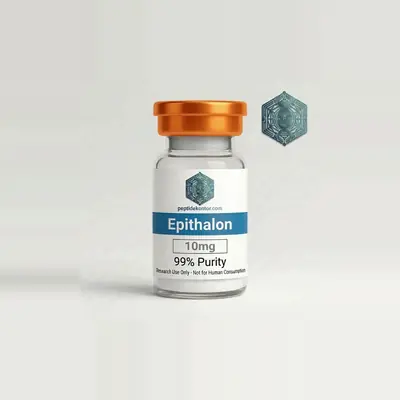
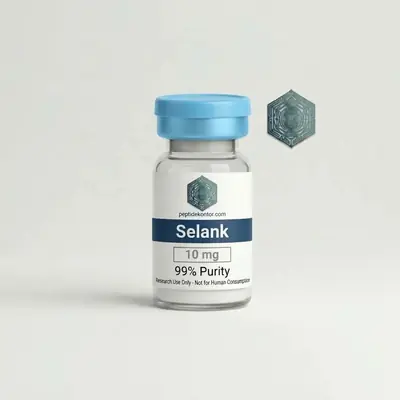
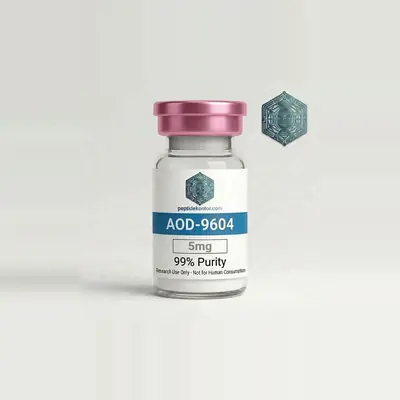
Every compound discussed above, with its current certificate of analysis.
More research notes
- Ipamorelin & CJC-1295 (DAC vs. No DAC): Pulsatile GH Release vs. Continuous Elevation in Preclinical Research
- BPC-157 and TB-500: The Molecular Synergy of Angiogenesis and Actin Upregulation
- Semaglutide vs. Tirzepatide: Comparing Mono-GLP-1 and Dual GLP-1/GIP Agonism in Laboratory Models
- Storage, reconstitution and cold chain: keeping peptides stable
- The five research categories, and what distinguishes them
- Choosing a fill size: 5 mg, 10 mg or 20 mg