
Storage, reconstitution and cold chain: keeping peptides stable
Peptides are chains of amino acids, and like any protein they have a native fold they can drift away from. Stability is a practical rather than a theoretical question: the difference between material that behaves as characterised and material that has quietly aggregated is usually one of temperature, light and how many times it was thawed.
Why lyophilized, and why frozen
Drying is the single most stabilising thing that happens to a peptide. A lyophilized vial has very little available water, so the reactions that require it — hydrolysis, oxidation, aggregation — proceed very slowly. This is why the product leaves our facility as a dry powder rather than a solution.
Cold storage slows those remaining reactions further. At –20 °C a well-made lyophilized peptide typically has a comfortable shelf life measured in years; at room temperature the same vial degrades far faster. The specification printed on every product page reflects the storage condition the data was established under, so treat the two as inseparable — a correct product stored wrongly is not a correct product.
What actually degrades a peptide
- Freeze–thaw cycles. Each cycle stresses the fold and the lyophilized matrix. One freeze–thaw is routine; repeated cycling is cumulative damage, which is why single-use aliquots are the standard research practice.
- Oxidation. Most often at methionine, adding about 16 Da. Sped up by light, metal ions and repeated thawing — this is the degradation pathway behind the identity checks in HPLC purity vs mass spec identity.
- Aggregation. Peptides self-associate into larger species, especially at high concentration or near their isoelectric point. Visible haze is a late sign; sub-visible aggregation usually arrives first.
- pH drift. In solution, peptides degrade fastest away from neutral pH, and a diluent left open to absorb CO₂ drifts more than expected.
- Microbial growth. A reconstituted vial is now a growth medium, and a compromised sterile filter or a dirty needle defeats the whole point of the fill.
Reconstitution
Reconstitution should be gentle. Peptides are frequently more soluble at a mildly acidic pH than in water alone, and both sterile water and a low-strength acidic buffer are standard choices for lyophilized material. The pattern that matters: dissolve fully, avoid vigorous shaking, and let the vial sit until the solution is clear rather than just cloudy.
Plan for a single use. If a vial must be split across several experiments, aliquot it immediately after reconstitution and freeze each aliquot separately — this converts one vial into several that are each thawed once. It costs a little more care and removes the main source of avoidable loss.
Peptides are chains of amino acids, and like any protein they have a native fold they can drift away from. Stability is a practical rather than a theoretical question: the difference between material that behaves as characterised and material that has quietly aggregated is usually one of temperature, light and how many times it was thawed.
Why lyophilized, and why frozen
Drying is the single most stabilising thing that happens to a peptide. A lyophilized vial has very little available water, so the reactions that require it — hydrolysis, oxidation, aggregation — proceed very slowly. This is why the product leaves our facility as a dry powder rather than a solution.
Receiving a shipment
A cold-chain parcel is the one point where storage, transport and quality intersect. Our shipping and cold chain page sets out how orders are packed, but the checks on arrival are short: confirm the gel packs are still cold or frozen, confirm the vials are dry powder with no discolouration, and confirm the batch numbers on the labels match the certificate register. A warm or thawed consignment is worth raising before use rather than after — a documented discrepancy triggers a documented investigation.
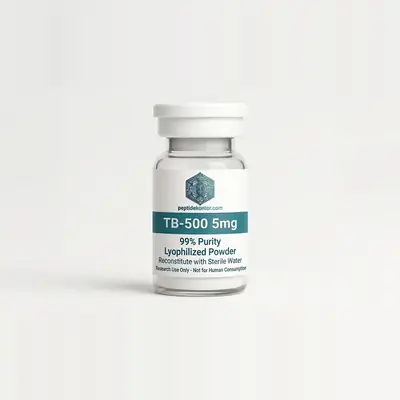
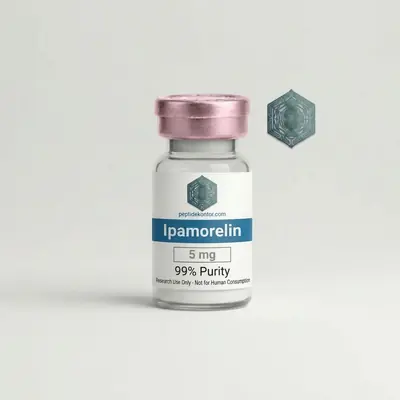
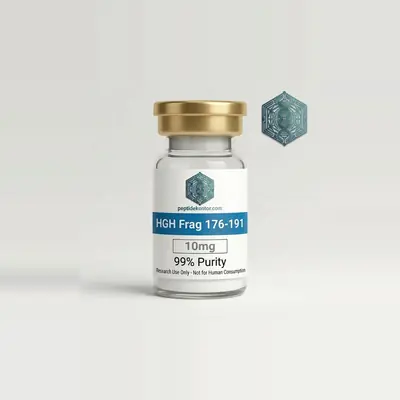
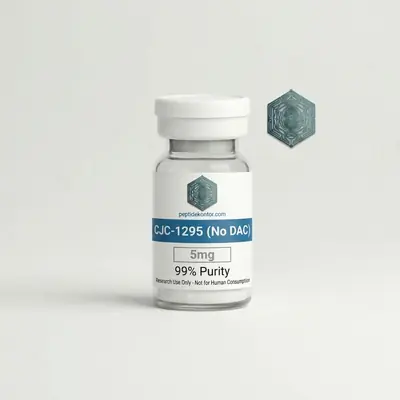
Products that ship in this format include TB-500, Ipamorelin, HGH Fragment 176-191 and CJC-1295, each with its own storage specification on the product page.
The general principle, and the one worth remembering: a certificate describes the material at release. Everything you do between the vial leaving the cold store and it reaching your bench is your responsibility to keep the certificate true, and the quality and release is only meaningful while that chain is intact.
Compounds referenced
Every compound discussed above, with its current certificate of analysis.
More research notes
- Ipamorelin & CJC-1295 (DAC vs. No DAC): Pulsatile GH Release vs. Continuous Elevation in Preclinical Research
- BPC-157 and TB-500: The Molecular Synergy of Angiogenesis and Actin Upregulation
- Semaglutide vs. Tirzepatide: Comparing Mono-GLP-1 and Dual GLP-1/GIP Agonism in Laboratory Models
- HPLC purity vs mass spec identity: what each assay actually proves
- The five research categories, and what distinguishes them
- Choosing a fill size: 5 mg, 10 mg or 20 mg