
BPC-157 and TB-500: The Molecular Synergy of Angiogenesis and Actin Upregulation
Tissue repair and cellular regeneration research frequently centers on two primary synthetic peptides: Body Protection Compound-157 (BPC-157) and Thymosin Beta-4 fragment (TB-500). While both are investigated for accelerated wound healing and musculoskeletal recovery in preclinical models, their biochemical pathways are completely distinct.
BPC-157 acts primarily as an angiogenic and nitric-oxide modulating signaling peptide. TB-500 functions as a G-actin sequestering peptide driving cell migration and cytoskeletal remodeling. When studied together in dual-peptide research models they exhibit distinct complementary mechanisms in soft tissue matrices.
Molecular Profiles and Structural Chemistry
Both peptides are short-chain synthetic fragments engineered for targeted bioactivity and enzymatic stability in laboratory assays.
Molecular Highlights
BPC-157 (Body Protection Compound-157)
- Sequence: Gly-Glu-Pro-Pro-Pro-Gly-Lys-Pro-Ala-Asp-Asp-Ala-Gly-Leu-Val (15 amino acids).
- Origin: Derived from a native gastric juice protective protein sequence.
- Molecular Mass: ~1,419.53 g/mol.
- Solubility: Highly hydrophilic, freely soluble in standard aqueous laboratory buffers.
TB-500 (Thymosin Beta-4 Active Fragment)
- Sequence: Ac-Leu-Lys-Lys-Thr-Glu-Thr-Gln (7 amino acids; represents residues 17–23 of Thymosin β4).
- Origin: Synthetic active domain of the naturally occurring 43-amino-acid Thymosin Beta-4 protein.
- Molecular Mass: ~889.01 g/mol.
- Solubility: Readily soluble in aqueous solutions without chemical cosolvents.
Primary Mechanisms of Action
1. BPC-157: Vascular Endothelial Upregulation and Nitric Oxide Pathways
BPC-157 initiates tissue recovery through vascular endothelial stabilization and focal adhesion signaling:
- VEGFR2 Activation: Promotes vascular endothelial growth factor receptor 2 (VEGFR2) internal activation, triggering rapid early-phase angiogenesis in ischemic or transected tissue models.
- eNOS and Nitric Oxide Modulation: Balances endothelial nitric oxide synthase (eNOS) activity, ensuring stable local microvascular perfusion without inducing systemic hypotensive shock.
- FAK-Paxillin Axis: Stimulates the phosphorylation of focal adhesion kinase (FAK) and paxillin, stabilizing cellular anchoring during fibroblast migration across extracellular matrix defects.
- Growth Factor Cascade: Preclinical models demonstrate downstream upregulation of Early Growth Response-1 (Egr-1) and collagen type I synthesis in tendon fibroblasts.
2. TB-500: G-Actin Sequestering and Cellular Mobility
TB-500 targets cellular structural dynamics through actin regulation:
- Actin Sequestration: Sequesters globular actin (G-actin), preventing premature polymerization and maintaining an intracellular monomer reserve necessary for rapid lamellipodia extension.
- Cellular Migration: Facilitates directional chemotaxis of endothelial cells, keratinocytes, and myoblasts into wounded zones to initiate matrix re-epithelialization.
- Downregulation of Fibrosis: Attenuates myofibroblast differentiation and lowers connective tissue growth factor (CTGF) expression, reducing disorganized collagen scarring.
- Matrix Metalloproteinase Regulation: Modulates MMP-2 and MMP-9 expression, facilitating controlled enzymatic degradation of necrotic tissue debris during repair phases.
Preclinical Synergy: Angiogenesis vs. Cytoskeletal Dynamics
Comparative and combination studies reveal how these two peptides target different phases of tissue remodeling:
| Biochemical Parameter | BPC-157 (Gastric Pentadecapeptide) | TB-500 (Thymosin β4 Fragment) |
|---|---|---|
| Primary Signaling Target | VEGFR2, eNOS, FAK-paxillin pathways | G-actin sequestering, MMP regulation |
| Primary Mode of Action | Neovascularization & extracellular matrix stability | Cell motility, lamellipodia formation, anti-fibrotic |
| Molecular Weight | 1,419.53 g/mol | 889.01 g/mol |
| Tissue Model Specificity | Tendon-to-bone junction, gastrointestinal mucosa | Skeletal muscle tissue, dermal matrix, cardiac tissue |
| Anti-Fibrotic Action | Moderate (organ protective via tissue integrity) | High (direct suppression of collagen scar crosslinking) |
| Observed In Vitro Synergy | Simultaneous new vessel sprouting (BPC-157) and rapid cellular migration into the newly vascularized defect (TB-500). | |
Preclinical Phenotypic Observations
Tendon and Ligament Repair Models
In rat Achilles transection and medial collateral ligament (MCL) tear models, BPC-157 accelerates the early formation of functional granulation tissue and collagen alignment. When combined with TB-500, researchers observe faster fibroblast entry into the damaged matrix alongside reduced scar tissue stiffness, yielding biomechanical tensile strength closer to uninjured native controls.
Myocellular and Dermal Regeneration
In crushed muscle injury assays, TB-500 accelerates satellite cell migration to the center of myofiber lesions, while BPC-157 restores capillary bed density surrounding the ischemic tissue. This co-administration demonstrates higher rates of muscle fiber regeneration compared to isolated single-peptide control cohorts.
Laboratory Handling and Reconstitution Parameters
Standard laboratory reconstitution procedures ensure high experimental reproducibility and prevent peptide fragmentation — our storage and cold chain sets out the cold-chain side:
- Lyophilized Powder Storage: Store lyophilized vials sealed at −20 °C. Avoid humidity exposure and rapid thermal fluctuations.
- Solvent Compatibility: Reconstitute using Bacteriostatic Water (0.9% Benzyl Alcohol) or Sterile 0.9% Sodium Chloride for injection. Both peptides dissolve rapidly without acid or base buffers.
- Reconstitution Technique: Aim the diluent against the glass vial wall. Allow the fluid to slowly submerge the lyophilized cake. Swirl gently in a circular motion until transparent. Never shake or vortex.
- Reconstituted Shelf-Life: Store liquid solutions between 2 °C and 8 °C protected from light. Reconstituted aliquots maintain experimental stability for up to 30 days under refrigeration.
Frequently Asked Questions
Why are BPC-157 and TB-500 frequently paired in tissue regeneration models?
They act through non-overlapping, complementary biological mechanisms. BPC-157 initiates new capillary formation (angiogenesis) to deliver oxygen and nutrients, while TB-500 mobilizes actin-dependent repair cells to physically bridge and restore the cellular lesion.
Does TB-500 contain the full Thymosin Beta-4 sequence?
TB-500 is a synthetic peptide containing the essential active domain (residues 17–23) of the full 43-amino-acid Thymosin Beta-4 molecule. This smaller fragment retains actin-sequestering activity while offering superior synthetic yield and stability in assay handling.
Can BPC-157 and TB-500 be reconstituted together in the same vial for testing?
In preclinical assay protocols, researchers often co-reconstitute them in the same aqueous medium if testing identical incubation ratios. However, to preserve precise dosage titration and prevent potential cross-aggregation during storage, separate reconstitution is standard analytical practice.
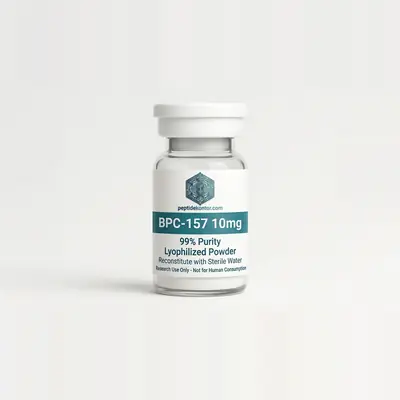
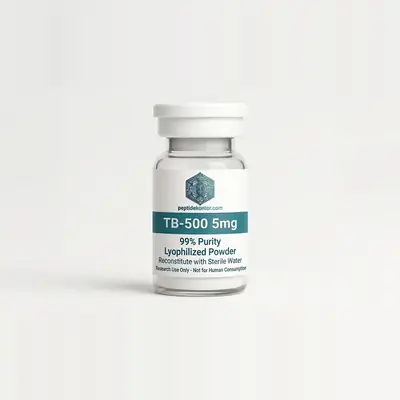
Genannte Verbindungen
Jede oben besprochene Verbindung mit ihrem aktuellen Analysenzertifikat.
Weitere Forschungsnotizen
- Ipamorelin & CJC-1295 (DAC vs. No DAC): Pulsatile GH Release vs. Continuous Elevation in Preclinical Research
- Semaglutide vs. Tirzepatide: Comparing Mono-GLP-1 and Dual GLP-1/GIP Agonism in Laboratory Models
- How to read a peptide certificate of analysis
- HPLC purity vs mass spec identity: what each assay actually proves
- The five research categories, and what distinguishes them
- Choosing a fill size: 5 mg, 10 mg or 20 mg