
How to read a peptide certificate of analysis
A certificate of analysis is a record of measurements taken on one specific batch of material. It is not a marketing badge and it is not a guarantee of biological effect — it is a statement of what was tested, by which method, with what numerical result. Reading one critically takes about two minutes, and the habit of doing so is the single best defence against buying material whose provenance is decorative.
The four fields to check first
Before any number matters, confirm these four things line up. If any one of them is vague, the rest of the document tells you very little:
- Compound and form. The name should match the catalogue entry, and the form should be stated — most commonly the lyophilized (freeze-dried) peptide, sometimes the acetate or HCl salt. Salt form changes molecular weight, so a certificate that omits it cannot be reconciled with a mass spectrum.
- Batch number. Every number on the document must belong to the same lot. Certificates are generated per lot, so a batch number that does not match the one printed on your vial label means the document describes different material.
- The laboratory. Name and accreditation status. An ISO 17025 scope covering your compound is worth substantially more than a generic "third-party tested" line.
- The date. Certificates describe material as it was released. A very old certificate on a recently filled vial is a contradiction worth resolving before anything else.
Purity: what the percentage means
Purity is nearly always reported as a single figure — 99.4%, 99.8% — and it almost always means one specific thing: the integrated area of the main peak as a percentage of total detector response in a single reverse-phase HPLC run. That is a real, falsifiable measurement, but it is narrower than the word suggests, and it inherits every limitation of the method.
Area percent is a ratio of signal, not a mass balance. It cannot separate a co-eluting impurity from the main compound, and it is only as trustworthy as the method behind it. "≥ 99.5% by HPLC, C18, gradient acetonitrile, 220 nm" is a claim you could, in principle, go and disprove by repeating. "Pharmaceutical grade" is not a measurement at all.
The detection wavelength matters more than buyers expect. Peptides are read near 214–220 nm because the peptide bond absorbs there, which is sensitive but also picks up trifluoroacetic acid and acetate residues from purification. A certificate stating the wavelength lets you interpret the trace; one omitting it does not.
Identity: the mass that should match
Purity tells you the main peak is dominant. It does not tell you the main peak is the right compound. Identity is established separately, most often by LC-ESI-MS, and the number to look for is the agreement between the observed molecular ion and the theoretical mass for that sequence and form.
Small deviations are normal. Sodium adducts, a doubly charged ion, and deuterated solvent shifts all push the observed mass a fraction of a dalton off the calculated value, so a match quoted to two decimal places of mass-to-charge is considered excellent for a peptide of several thousand daltons. A discrepancy beyond that is not rounding — it is a different molecule, or a modified one. The two assays answer different questions, covered in HPLC purity vs mass spec identity.
The impurity panel
Purity and identity describe the molecule you wanted. The rest of the panel describes what came with it, and for research use these often matter more:
| Assay | What it controls for | Why it matters |
|---|---|---|
| Endotoxin (LAL) | Lipopolysaccharide contamination | Interferes with cell-culture readouts at concentrations far below anything a mass spec would detect |
| Residual solvents (GC) | Acetonitrile, TFA, acetic acid | Carryover from purification; cytotoxic in assay systems |
| Heavy metals (ICP-MS) | Catalyst and process residues | Trace contamination from synthesis chemistry |
| Water content | Residual moisture in the lyophilizate | Hydrolysis risk during storage |
| Sterility / bioburden | Microbial load at fill | Matters for anything that touches living systems |
These are covered in more depth in how endotoxin is tested, which is the assay that most often decides whether a batch is usable for cell-culture work.
Making results cross-checkable
A certificate is only useful if you can get back to it. Every current lot is listed in the certificate register with its issuing lab, method and batch number — the same three fields printed on the certificate itself. Our third-party workflow is public so you can see how a retained sample is blind-coded, split and run by a lab that never touched the batch.
The practical sequence: pick a compound from the [[catalogue]], open its COA tab, confirm the batch number matches the vial, and check that purity and identity were both measured. If you want to re-run something yourself, run it in duplicate and match our column chemistry and solvent system first — most apparent disagreements turn out to be method differences rather than material differences. Our quality and release specification sets out what each lot must meet.
Genannte Verbindungen
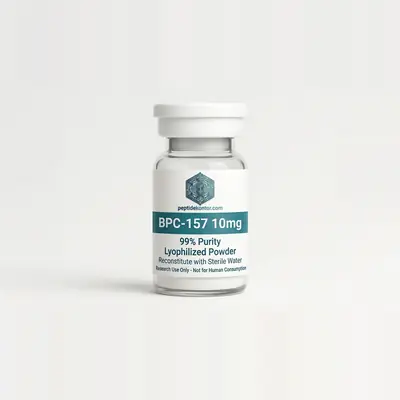
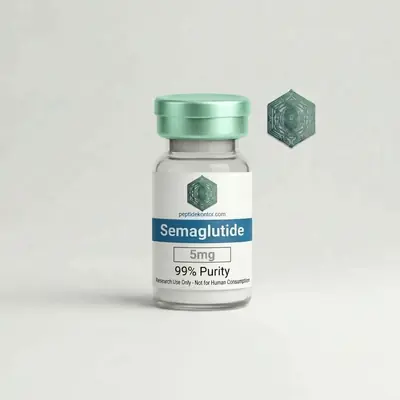
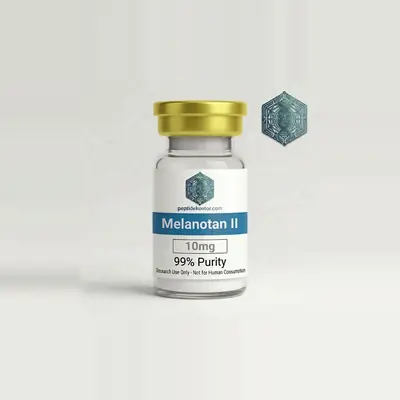
Jede oben besprochene Verbindung mit ihrem aktuellen Analysenzertifikat.
Weitere Forschungsnotizen
- Ipamorelin & CJC-1295 (DAC vs. No DAC): Pulsatile GH Release vs. Continuous Elevation in Preclinical Research
- BPC-157 and TB-500: The Molecular Synergy of Angiogenesis and Actin Upregulation
- Semaglutide vs. Tirzepatide: Comparing Mono-GLP-1 and Dual GLP-1/GIP Agonism in Laboratory Models
- Storage, reconstitution and cold chain: keeping peptides stable
- The five research categories, and what distinguishes them
- Choosing a fill size: 5 mg, 10 mg or 20 mg