
Endotoxin testing: the assay that decides whether a batch is usable
Endotoxin is the one impurity where a trace amount causes outsized problems. A pure peptide at 99.5% HPLC purity can still carry enough lipopolysaccharide to invalidate an entire cell-culture experiment — and because LPS acts as a potent inflammatory signal, it does not blur results, it actively fabricates them.
What LPS actually is
Lipopolysaccharide is a component of the outer membrane of Gram-negative bacteria. Structurally it is a lipid anchor carrying a long polysaccharide chain, and it is extraordinarily stable — it survives heat, resists many solvents, and is not readily degraded by the processes that remove other contaminants.
Biologically it is what makes the molecule dangerous. LPS binds TLR4 on innate immune cells and triggers a strong signalling cascade at concentrations in the low picogram range. In a culture intended to show a modest treatment effect, that signal is indistinguishable from a real one — and because the cascade saturates, it can distort a result in either direction.
The kinetic LAL assay
LAL stands for Limulus amebocyte lysate — a freeze-dried preparation derived from horseshoe crab haemocytes that coagulate in the presence of endotoxin. The modern kinetic format improves on the historical gel-clot method in two ways: it is far more sensitive, and it gives a quantitative result rather than a pass/fail boundary.
- Standard endotoxin is serially diluted to build a standard curve, so the instrument converts time-to-gelation directly into EU/mL.
- The sample is diluted to at least two concentrations, at one of the maximum valid dilutions — the point at which interference is controlled.
- A kinetic reader records the time each well crosses the gelation threshold, and results are read against the curve.
- Products are assayed for inhibition/enhancement against the standard, because a sample can suppress the reaction and produce a falsely clean result.
- The result is expressed in EU per milligram, or as a calculated limit in endotoxin units per dose.
Reading an EU/mg specification
Endotoxin limits are expressed relative to a route and a dose, because what matters is the amount reaching a living system. Limits vary by application and by the local pharmacopeia, so when comparing a certificate the number to check is the one appropriate to your assay, not simply the lowest figure printed. A limit of 0.05 EU/mg is strict; looser limits are normal and correct for many research applications.
Two practical notes. First, EU/mg is a mass-normalised figure, so a larger fill size dilutes the same contamination across more material and gives a better number — do not read a per-vial result as per-milligram without converting. Second, reconstituted solutions can pick up endotoxin from the diluent and from handling, so cleanliness after reconstitution is a separate concern from certification of the dry powder.
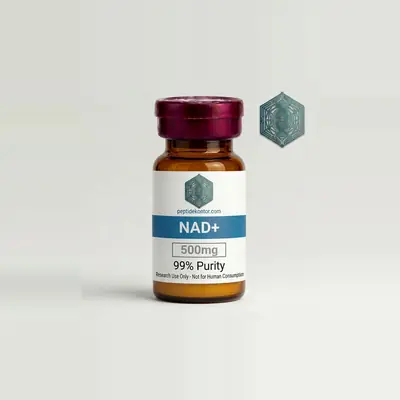
Our release specification runs a kinetic LAL on every lot against a 0.05 EU/mg limit, described in the third-party testing, with results published per batch in the certificate register. A note on which compounds are most often used in cell-culture work: NAD+ and the TB-500 / BPC-157 pair. On handling endotoxin in practice, see our storage and cold chain.
Composants cités
Chaque composé mentionné ci-dessus, avec son certificat d’analyse actuel.
Plus de notes de recherche
- Ipamorelin & CJC-1295 (DAC vs. No DAC): Pulsatile GH Release vs. Continuous Elevation in Preclinical Research
- BPC-157 and TB-500: The Molecular Synergy of Angiogenesis and Actin Upregulation
- Semaglutide vs. Tirzepatide: Comparing Mono-GLP-1 and Dual GLP-1/GIP Agonism in Laboratory Models
- Storage, reconstitution and cold chain: keeping peptides stable
- The five research categories, and what distinguishes them
- Choosing a fill size: 5 mg, 10 mg or 20 mg